
AI griefbots and trauma are becoming an important conversation in 2026 as more people encounter digital tools that can simulate the voice, writing style, or personality of someone who has died. For a grieving person, that promise can feel powerful. It may sound like one more message, one more chance to say goodbye, or one more moment with someone they were not ready to lose.
But grief is not simple, and technology does not always make it safer. A griefbot may feel comforting at first, especially during loneliness, shock, regret, or unresolved loss. Yet for some people, it may also keep pain active, blur emotional boundaries, or make it harder to accept reality. These risks matter because grief can already become a silent injury: private, invisible, and difficult to explain to people who only see the outside.
This topic fits naturally with Silent Injuries because digital grief sits at the crossroads of trauma, technology, memory, and emotional recovery. It connects with existing guides such as Digital Trauma and Silent Injuries, AI Chatbots for Trauma Support in 2026, and EMDR Therapy for Trauma.
Why AI Griefbots and Trauma Are Trending in 2026
AI griefbots are part of a wider shift in how people use technology for emotional support. Chatbots are no longer used only for simple answers or productivity tasks. Many people now use them to talk about loneliness, anxiety, relationships, grief, and private pain. That makes the rise of griefbots especially sensitive. When a tool imitates someone who has died, it is not just giving advice. It is entering the emotional space of mourning.
Griefbots may be built from text messages, voice recordings, videos, social media posts, or other digital traces. The result can feel surprisingly personal. A person may type a question and receive a response that sounds familiar enough to trigger tears, comfort, confusion, or longing. That emotional intensity is exactly why the topic needs careful attention.
What griefbots actually do
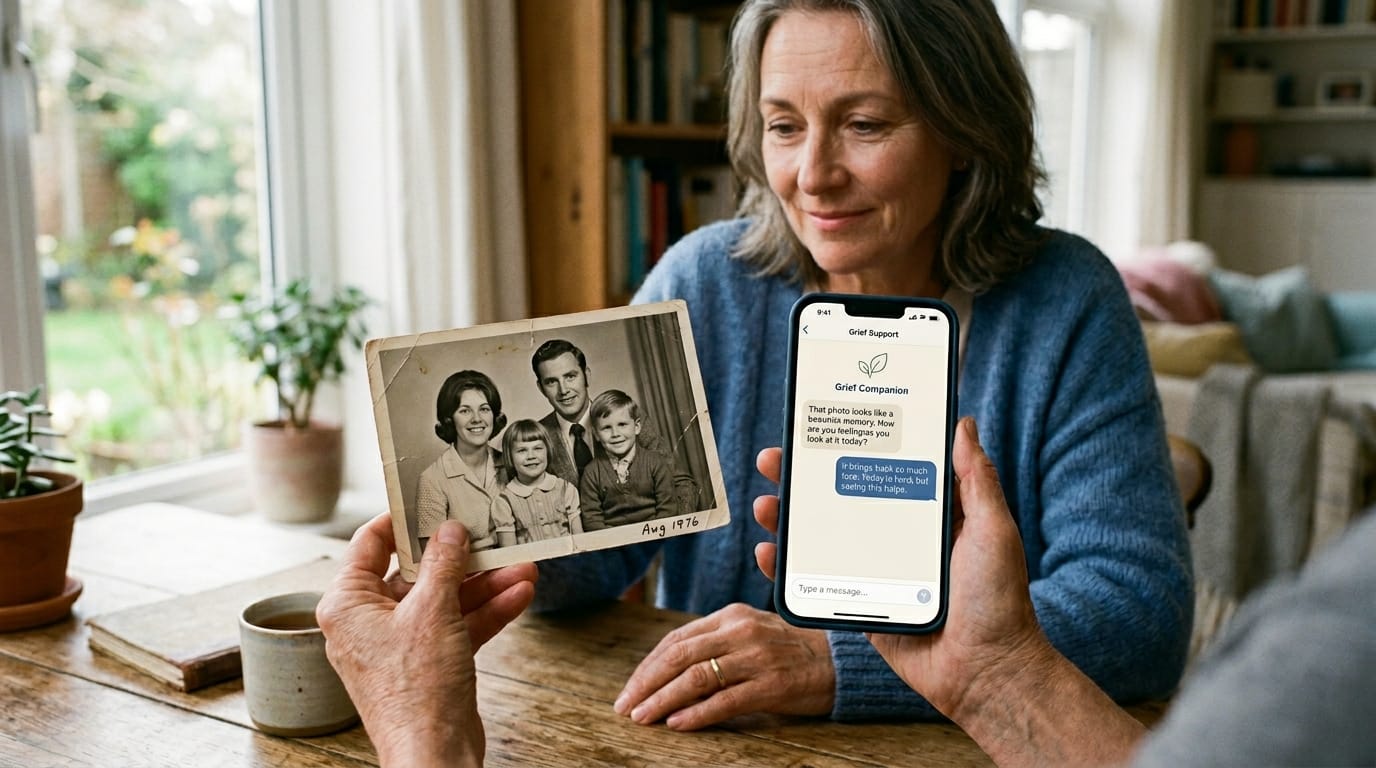
A griefbot does not bring a person back. It generates responses based on data, patterns, and design. That distinction is important. A grieving person may understand logically that the tool is artificial, but the nervous system may still react as if the loved one is somehow present. For trauma survivors, that emotional mismatch can become destabilizing.
This does not mean every digital memorial is harmful. Some people may find comfort in saved voicemails, photo albums, written letters, or carefully designed memorial pages. The concern is stronger when the tool becomes interactive and starts producing new responses that the deceased person never actually said. That can complicate memory, consent, and emotional closure.
1. The tool may interrupt natural grieving
Healthy grieving often involves waves of remembering, longing, sadness, anger, acceptance, and adjustment. It does not happen in a straight line. A griefbot can interrupt that process when it gives the illusion that the relationship is still actively continuing in the same way. Instead of slowly learning to live with absence, a person may keep returning to a simulation for comfort.
That can be especially risky when someone is already vulnerable to isolation. If the griefbot becomes the main place where the person cries, speaks, or seeks comfort, it may reduce the push toward real support. Over time, the tool can become a private emotional loop rather than a bridge toward healing.
2. The simulation may create confusion or guilt
Grief already carries difficult questions. Did I say enough? Did I do enough? Would they forgive me? Would they understand? When a griefbot responds as if it can answer those questions, the person using it may feel temporary relief. But that relief can become complicated if the response feels too real.
A chatbot cannot truly forgive, bless, approve, or release someone from guilt. It can only generate language. If the response feels emotionally powerful, the user may start treating the tool like an authority over unresolved grief. That is not fair to the grieving person, and it is not a safe substitute for trauma-informed care.
How digital afterlife tools can reopen silent injuries
Loss can become traumatic when it is sudden, violent, unresolved, complicated by guilt, or connected to earlier wounds. For someone with complex trauma, abandonment wounds, relationship trauma, or a history of unsafe attachment, an AI griefbot may activate more than sadness. It may trigger fear, dependency, shame, dissociation, or obsessive checking.
This connects with the ideas in Complex Trauma in 2026. Hidden emotional wounds often affect how a person experiences closeness and separation. A griefbot can make that harder by creating a relationship that feels responsive but cannot truly care, protect, repair, or remain accountable.
3. Watch for signs the tool is making grief heavier
Some warning signs are subtle. A person may feel unable to sleep after using the griefbot. They may reread conversations for hours, feel panic when they cannot access the tool, or hide their use from family and friends. They may feel more attached to the simulation than connected to living support. They may also feel emotionally flooded after conversations that were supposed to help.
Other signs are more serious. If the tool increases despair, encourages isolation, intensifies guilt, or makes someone feel unable to cope with reality, it is time to step away and seek human support. Grief support should help a person feel more grounded over time, not more trapped inside a private digital world.
Safer Ways to Approach AI Griefbots During Healing
The healthiest approach is not panic or blind trust. It is boundaries. AI griefbots should never replace therapy, community, spiritual care, family support, or crisis services. If someone chooses to use one, it should be limited, intentional, and emotionally monitored. A good rule is simple: use technology only if it helps you move toward real-world support, not away from it.
For outside reading, the article Digital Afterlife: The Sociological Implications of AI-Based Griefbots in Bereavement Practices discusses how acceptance of griefbots is shaped by emotional, ethical, technological, and cultural factors. That kind of research matters because grief technology is not only a product issue. It is a human wellbeing issue.
Build a grief plan before using digital tools

Before using a griefbot, it helps to create a simple plan. Decide when you will use it, how long you will stay, and what you will do afterward to return to the present. For example, you might limit use to 10 minutes, journal afterward, drink water, take a short walk, or text a trusted person. The goal is to prevent the tool from becoming an endless emotional spiral.
It is also wise to ask why you want to use it. Are you seeking comfort, closure, forgiveness, answers, or the feeling of being close again? Naming the need can help you choose a safer support. Sometimes the real need is not another simulated conversation. It may be therapy, a grief group, a memorial ritual, or a supportive person who can sit with the pain.
4. Choose real support when grief becomes traumatic
If grief is affecting sleep, work, relationships, safety, or daily functioning, real support matters. Trauma-informed therapy can help when loss is tied to flashbacks, guilt, panic, emotional numbness, or intrusive memories. Some people may benefit from EMDR, grief counseling, support groups, or body-based regulation practices. You can also pair this topic with Trauma and Inflammation in 2026 because grief and trauma can show up in the body as exhaustion, tension, sleep disruption, and chronic stress.
AI griefbots and trauma will likely remain part of the mental health conversation as digital afterlife tools become more common. The key is to remember what technology cannot do. It cannot truly know the person who died. It cannot replace consent, memory, relationship, or professional care. It cannot hold grief with human responsibility.
For some people, a griefbot may feel like a temporary comfort. For others, it may reopen silent injuries that were already difficult to carry. The safest path is to treat these tools with caution, boundaries, and honesty. Grief deserves more than engagement. It deserves safety, presence, and support that helps the living keep living.
This article is for educational purposes only and is not a substitute for medical or mental health care. If grief, trauma symptoms, or thoughts of self-harm are affecting your safety or ability to cope, contact a licensed mental health professional, crisis support service, or local emergency services.