
Post-concussion exercise intolerance can be one of the most confusing silent effects of a mild traumatic brain injury. A person may feel reasonably comfortable while sitting still, then develop dizziness, headache, fatigue, nausea, brain fog, or a racing heart after walking faster, climbing stairs, exercising, or returning to work.
That pattern can be frustrating because the original injury may have looked mild. There may have been no visible wound, no skull fracture, and no long hospital stay.
Yet concussion symptoms can involve more than headache or memory problems. In some people, physical exertion brings symptoms back or makes them noticeably worse.
Research published in 2026 has added to the discussion about how mild traumatic brain injury may affect exercise tolerance and the body’s automatic regulation of heart rate during recovery. The findings do not mean everyone with a concussion develops autonomic dysfunction. They do show why exercise-related symptoms deserve careful assessment instead of being dismissed as a lack of fitness or motivation.
Why Post-Concussion Exercise Intolerance Can Feel So Unpredictable
A concussion can affect how a person feels, thinks, sleeps, and moves. Symptoms can include headache, dizziness, balance problems, fatigue, trouble concentrating, sensitivity to light or noise, and sleep changes.
Some symptoms appear immediately. Others may not become obvious until hours or days later.
Exercise adds another layer because physical activity increases heart rate, blood flow, breathing, visual input, head movement, and coordination demands at the same time.
Someone may therefore feel fine during a quiet morning but become symptomatic during a brisk walk or a busy commute.
What 2026 Research Says About Exercise and Autonomic Function
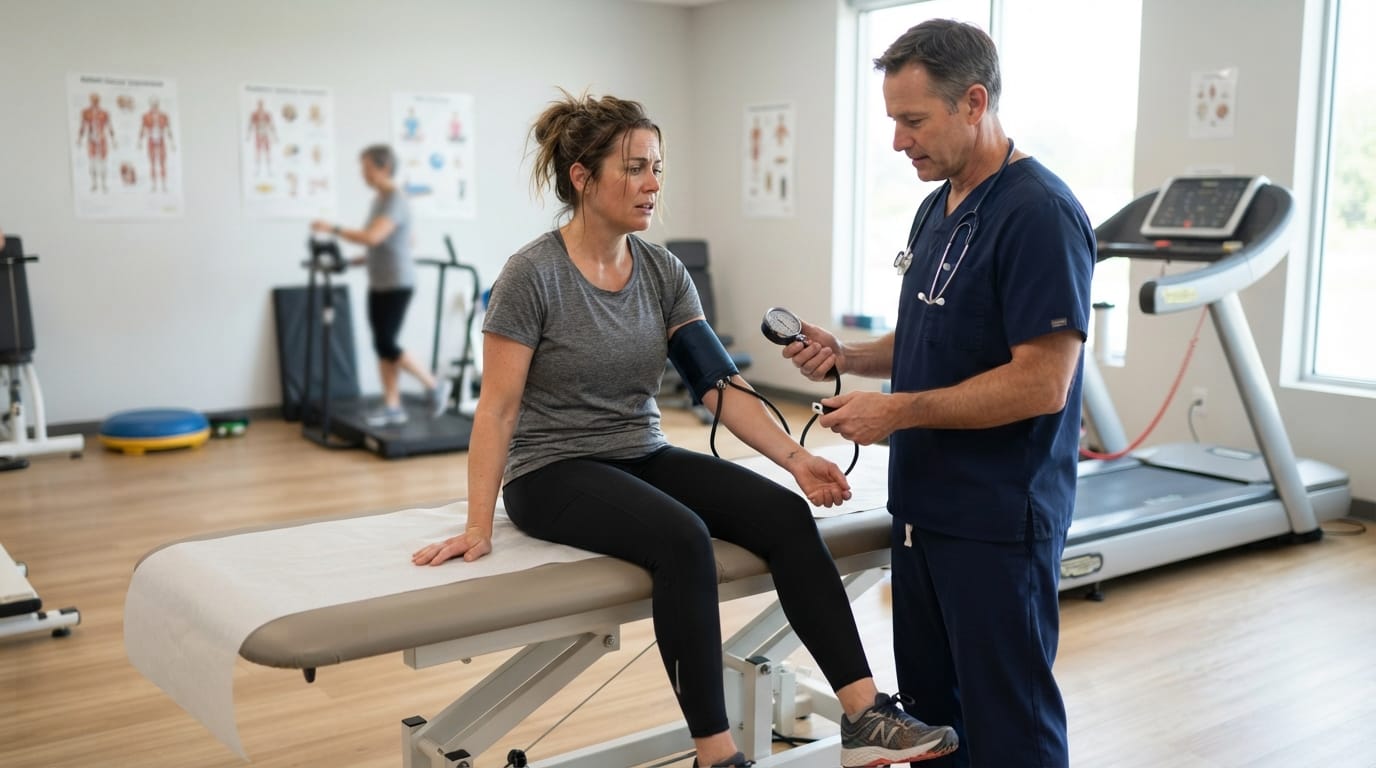
A prospective observational study published in the Journal of Head Trauma Rehabilitation in 2026 examined adults with mild traumatic brain injury during the Buffalo Concussion Treadmill Test.
The study included 21 adults with mild TBI, along with healthy active and healthy sedentary comparison groups. Researchers measured exercise duration, heart rate, symptom response, and heart-rate recovery.
The mild TBI group stopped the treadmill test sooner on average than the healthy active group. Eight of the 21 participants with mild TBI stopped because their symptoms became worse during testing.
Researchers also found differences in the percentage of predicted maximum heart rate reached before stopping.
The Nervous System Helps Regulate Heart Rate During Activity
The autonomic nervous system controls many functions that happen without conscious effort. These include heart rate, blood pressure, sweating, digestion, and parts of the body’s response to physical activity.
Researchers have been studying whether concussion can temporarily affect this regulation in some people.
In the 2026 treadmill study, the authors suggested that difficulty reaching a higher heart-rate threshold during controlled exercise may help identify altered physiological responses after mild TBI.
However, the study was small, and the authors also found that physical activity level influenced heart-rate recovery. That means the results should not be interpreted as proof that every unusual heart-rate response after concussion comes directly from brain injury.
The research is better viewed as another reason for clinicians to assess symptoms carefully rather than assuming every patient will recover in exactly the same way.
Exercise Symptoms Do Not Automatically Mean POTS or Another Diagnosis
Dizziness, fatigue, rapid heart rate, weakness, and feeling worse while standing or exercising can occur for many reasons.
Possible explanations can include concussion recovery, dehydration, deconditioning, sleep disruption, medication effects, anemia, vestibular problems, anxiety, cardiovascular conditions, or other medical issues.
People sometimes see these symptoms online and immediately assume they have postural orthostatic tachycardia syndrome, or POTS. That diagnosis requires a specific clinical evaluation and should not be made from symptoms alone.
If your symptoms started after a crash or head injury, our article on delayed concussion symptoms after a car accident explains why the first few hours do not always reveal the full impact of a mild brain injury.
Why Symptoms May Return When You Try to Do More
Many people expect concussion recovery to work like a straight line. They assume each day should feel better than the last.
Recovery is often less predictable.
A person may tolerate reading but struggle with a grocery store. Another may handle a quiet work meeting but develop a headache after walking several blocks. Someone else may feel well in the morning and become exhausted by afternoon.
These changes can reflect the amount of physical, cognitive, visual, and emotional demand placed on the nervous system.
That is why returning to activity should usually be gradual rather than all-or-nothing.
Complete Rest for Weeks Is Usually Not the Goal

Modern concussion guidance generally does not recommend staying completely inactive for long periods after a mild TBI.
The CDC advises a short period of relative rest during the first few days, followed by a gradual return to light physical and everyday activities as tolerated.
If symptoms increase significantly, the activity level may need to be reduced and progressed more slowly.
That does not mean exercising through severe dizziness, intense headache, confusion, or other concerning symptoms. It means recovery often involves carefully rebuilding tolerance rather than avoiding all movement until every symptom disappears.
Supervised exercise testing may sometimes help clinicians determine what level of activity a person can tolerate safely.
How to Respond to Post-Concussion Exercise Intolerance Safely
If physical activity consistently brings symptoms back after a concussion, tell a healthcare professional rather than repeatedly testing your limits on your own.
Describe exactly what happens. Note which activity triggers symptoms, how long you can perform it, how severe the symptoms become, and how long recovery takes afterward.
That information may help distinguish general fatigue from a more specific exercise-related pattern.
A clinician may also evaluate balance, vision, neck symptoms, vestibular function, sleep, mood, heart rate, blood pressure, medications, and other possible contributors.
Track Patterns Without Turning Recovery Into Constant Monitoring
A simple symptom log can be useful. You do not need to record every heartbeat or every sensation throughout the day.
Instead, note a few meaningful details. Record the activity, approximate duration, symptoms that appeared, and how long it took to settle afterward.
Patterns may become easier to see over several days.
For example, you may notice that easy walking is manageable but grocery shopping triggers dizziness because it combines walking, visual scanning, noise, and decision-making. You may tolerate computer work for 30 minutes but struggle after two hours without a break.
Those observations can help guide a gradual return to normal activity.
Emotional symptoms can overlap with physical concussion symptoms as well. If driving, traffic, or the memory of the accident triggers panic or hypervigilance, our article on car accident PTSD symptoms explains how emotional trauma and physical recovery can exist at the same time.
Know When Symptoms Need More Urgent Medical Attention
Most people with a mild TBI improve over time, but some symptoms require urgent evaluation.
Seek emergency medical care after a head injury for worsening severe headache, repeated vomiting, seizures, increasing confusion, unusual behavior, slurred speech, weakness or numbness, loss of consciousness, unequal pupils, or difficulty waking.
For ongoing symptoms that are not emergencies, contact a healthcare professional if they are not improving, are getting worse, or are interfering with work, school, driving, sleep, or normal daily activity.
The CDC notes that some people experience symptoms for months or longer and recommends follow-up when symptoms persist beyond the expected recovery period.
You can review current recovery guidance through the CDC’s guidance on recovery after mild TBI and concussion.
It is also important not to interpret every difficult day as permanent damage.
Symptoms can fluctuate during recovery. Poor sleep, stress, increased workload, dehydration, illness, or doing too much too quickly may temporarily make a person feel worse.
The goal is to notice patterns and adjust activity in a measured way.
If symptoms last for weeks or months, recovery may require more than waiting. Depending on the individual, care can involve concussion rehabilitation, vestibular therapy, supervised aerobic exercise, headache management, sleep treatment, mental health support, or other targeted approaches.
Silent injuries often become hardest to manage when people cannot explain what they are experiencing. Someone may look physically recovered while struggling with dizziness, concentration problems, fatigue, or exercise intolerance every day.
Our guide to the long-term effects of silent injuries explores why invisible symptoms can still affect daily life long after the original event.
Post-concussion exercise intolerance deserves the same careful attention.
The 2026 research does not prove that every person with lingering symptoms has autonomic dysfunction. It does show that controlled exercise can reveal differences that may not be obvious while someone is resting.
If activity repeatedly causes dizziness, headache, fatigue, nausea, brain fog, or unusual heart-rate symptoms after a concussion, do not simply assume you are out of shape.
Bring the pattern to a qualified healthcare professional. A careful evaluation can help identify what may be contributing and guide a safer return to activity.
This article is for general educational purposes and is not medical advice. Concussion symptoms can overlap with many other conditions. Seek professional medical evaluation for persistent, worsening, or concerning symptoms, and seek emergency care for neurological danger signs.